A small crack, a rust spot, or a gap in the mortar may look harmless from the ground. But water can enter weak joints, metal parts can corrode, and damage inside the flue may stay hidden. Knowing the early signs can help you address a defect before it affects more of the chimney or home.
Key Takeaways
- A cracked crown or missing cap can let water enter the chimney.
- Deteriorating mortar and damaged bricks can allow moisture to spread.
- Failed flashing can cause leaks around the roof connection.
- Flue liner damage may not be visible from outside.
- Annual inspections help identify conditions that need maintenance or repair.
- A Small Crack in the Chimney Crown
The chimney crown is the masonry or concrete surface at the top of a masonry chimney. It helps direct rain away from the flue and chimney walls. A narrow crack may seem harmless, but it can give water a way into the structure.
Repeated moisture exposure can weaken the crown and the masonry below it. Water entering small openings may contribute to cracking, mortar deterioration, and damage to nearby components.
What to look for:
- Hairline cracks across the crown.
- Chipped, loose, or broken sections.
- Deterioration near the top courses of brick.
- Rust or moisture marks inside the fireplace.
A professional can determine whether the crown needs a localized repair or more extensive work. The right fix depends on the material, the damage, and the surrounding masonry.
- Crumbling Mortar or Small Areas of Brick Damage
Mortar holds the bricks or stones in a masonry chimney together. When it cracks, recedes, or crumbles, water can enter the joints and reach the masonry behind them.
Look for mortar that appears powdery, recessed, or missing. White deposits on the brickwork are called efflorescence. They form when moisture moves through masonry and leaves mineral salts on the surface as it evaporates. Flaking brick faces, known as spalling, can also point to moisture-related deterioration.
These signs do not always mean the chimney needs to be rebuilt. A professional assessment can determine whether repointing, brick replacement, or more extensive masonry restoration is appropriate.
Why early attention matters: Water entering open joints can affect more than the visible area. It may contribute to loose bricks, recurring leaks, and wider deterioration.
Historic homes need particular care. Delaware County’s Maintaining Your Historic Home guide explains that older masonry may have softer, more permeable materials than modern construction. It cautions that an incompatible hard mortar can shift stress into original brick and cause further damage. Repairs should use materials that suit the existing masonry. For historic homes in Delaware County and across the Main Line, matching the original masonry is an important part of planning the repair.
- A Gap or Rust Spot in the Chimney Flashing
Chimney flashing is the metal system that seals the joint where the chimney passes through the roof. If it pulls away, corrodes, or develops gaps, water can reach the roof deck and nearby materials.
Watch for brown ceiling stains, damp drywall, peeling paint, water marks in the attic after rain, or visible rust and separation around the roofline.
A leak near the chimney does not always come from the flashing. Water may enter through a damaged crown, cap, or masonry joint before appearing indoors. The source should be identified before repairs begin.
Professional chimney flashing repair may involve securing a loose section, replacing damaged metal, or addressing nearby roof and masonry details. Covering a gap with roof cement may hide the symptom without fixing the failed connection.
- A Missing, Loose, or Damaged Chimney Cap
A chimney cap covers the flue opening and helps keep out rain, animals, and debris. If it is missing, bent, badly corroded, or no longer secure, the chimney is more exposed to water entry and blockages.
Rain can enter the flue, while birds or other animals may bring nesting material into the chimney. Debris can restrict the passage used to vent smoke and combustion gases.
Check for visible signs from the ground:
- No cap over the flue opening.
- A cap that looks tilted or loose.
- Rust or visible damage on the metal.
- Debris or nesting activity around the chimney top.
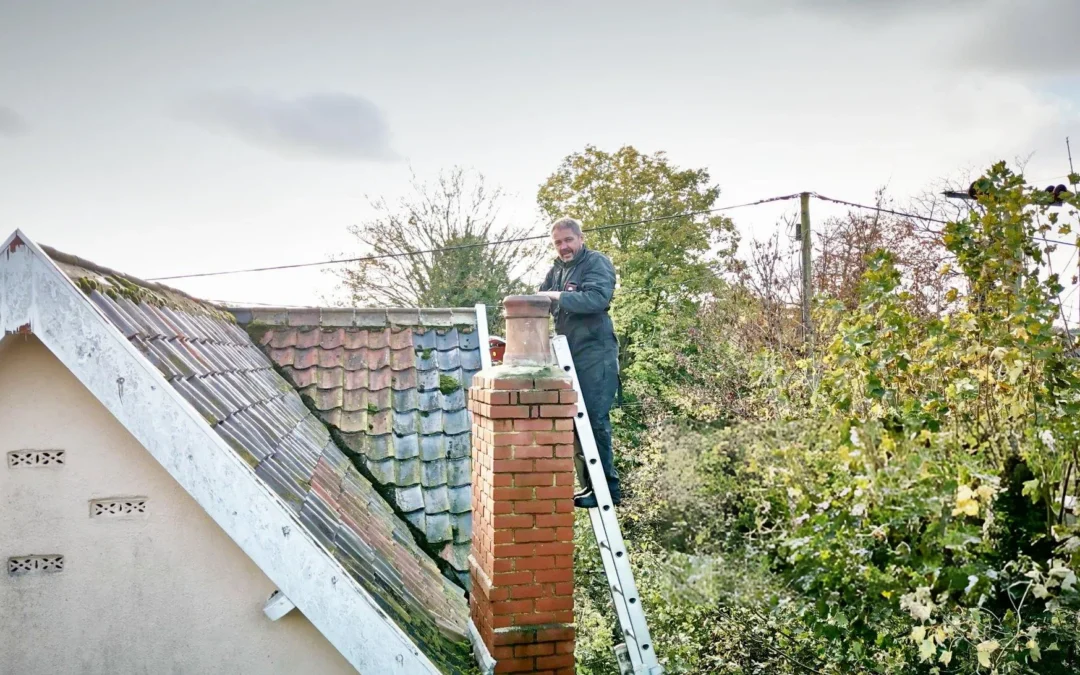
Do not climb onto the roof to check or adjust the cap. A qualified professional can confirm whether it is secure, correctly sized, and suitable for the chimney and appliance.
- Cracks, Gaps, or Deterioration in the Flue Liner
The flue liner is the inner passage that carries smoke and combustion gases out of the home. Masonry chimney liners may be made from clay tile or an approved liner system. They also help protect the surrounding structure from heat and combustion byproducts.
A liner can crack, shift, or deteriorate after a chimney fire, moisture intrusion, corrosive flue conditions, or an appliance change. Some defects are hidden from view. Warning signs include tile fragments in the firebox, smoke escaping through masonry joints, or unusual debris inside the flue.
A professional inspection may include an internal examination or video scan. Depending on the findings, a chimney relining service may be appropriate. The right chimney liner installation depends on the appliance, fuel, flue dimensions, and applicable requirements, not a generic online recommendation.
When searching for chimney relining near me, look for a provider that explains the inspection findings and why the proposed liner suits your system. Relining is not automatically required for every crack or older chimney.
- Rust Stains Around the Damper or Firebox
Rust on a damper or metal firebox component can signal moisture inside the chimney. A small orange-brown mark may look like surface rust, but it can point to damage higher up. The Chimney Safety Institute of America notes that rust stains in the fireplace area can indicate more serious water damage to the damper or upper chimney structure.
Do not simply paint over the rust. A professional can look for the water entry point and assess nearby components. Repairs may involve the cap, crown, flashing, masonry, or affected metal parts.
How Can You Spot Chimney Problems Before They Spread?
You can check some warning signs without climbing onto the roof or opening the chimney. Use binoculars to view exterior masonry from the ground, and look for new stains or damp areas inside.
| What You Notice | What It May Indicate |
|---|---|
| Cracks across the top of the chimney | Crown deterioration |
| Recessed or missing mortar | Masonry joints need assessment |
| White deposits or flaking brick | Moisture movement through masonry |
| Water stains near the chimney | A leak at the crown, cap, flashing, or masonry |
| Rust around the damper or firebox | Possible water entry and corrosion |
| Tile fragments or unusual debris | Possible flue liner damage |
These signs are clues, not a diagnosis. A chimney inspection helps determine where the problem starts and whether more than one component is involved.
The Chimney Safety Institute of America follows NFPA 211 guidance that chimneys, fireplaces, and vents should be inspected at least once a year. Cleaning, maintenance, and repairs should be carried out when necessary. A professional chimney sweep can recommend cleaning or repair based on what the inspection finds.
When Should You Call a Chimney Professional?
Arrange an inspection if you notice a leak, deteriorating mortar, loose bricks, rust, a damaged cap, or signs of liner damage. A problem may be developing before it leaves a visible mark indoors.
Stop using the fireplace and seek a professional evaluation if you suspect a chimney fire, find liner fragments in the firebox, or notice smoke escaping through masonry joints. CSIA explains that some fire-related damage cannot be seen from above or below.
For homeowners looking for a chimney sweep in Philadelphia, the Main Line, or nearby communities, choose a company that can assess both the flue and exterior structure. When comparing chimney services, look for clear findings, relevant training, and an explanation of the repair needed. A search for a chimney sweep near me or a chimney company near me should lead to more than a convenient appointment. Ask whether the provider can inspect and document the system, and explain the difference between cleaning, repair, and relining.
What should I check when searching for chimney services?
Look for relevant credentials, experience with your type of chimney, a clear inspection process, and written findings. Ask whether the company can address the issue it identifies or explain when another specialist is needed.
Address Small Chimney Problems Before They Become Larger Repairs
Cracks, worn mortar, damaged flashing, and liner defects can start small. An inspection can establish whether the chimney needs maintenance, a focused repair, or broader restoration.
D.J. Cross Inc. has served Greater Philadelphia and the Main Line since 1981, with services covering chimney inspection, cleaning, relining, capping, repair, and masonry restoration. Explore D.J. Cross chimney services or call 610-580-2293.