Key Highlights
- Chimney sweeping and inspection serve different purposes and should not be treated as the same service.
- Sweeping removes soot, creosote, debris, and other buildup from the chimney.
- An inspection checks the chimney, liner, masonry, and other components for damage or safety concerns.
- Both services may be useful before the heating season, after long periods of non-use, or when fireplace problems appear.
- A professional inspection can help identify when chimney relining services may be necessary.
- Regular chimney maintenance can help homeowners identify problems before they become more serious.
Why Chimney Maintenance Requires More Than Cleaning
A chimney may look clean from the outside while problems are developing inside. Soot, creosote, debris, cracks, and liner damage can affect how safely the system works. That is why chimney maintenance should not focus on cleaning alone.
A professional inspection looks for damage and safety concerns. Sweeping removes soot, creosote, and debris that can restrict airflow. These services have different purposes, but they work best together.
For homeowners searching for chimney sweep services, understanding the difference between sweeping and inspection can help you decide when your chimney needs professional attention.
What Is the Difference Between Chimney Sweeping and Inspection?
Chimney sweeping and inspection are not the same service.
A sweep focuses on cleaning the inside of the chimney. An inspection focuses on checking its condition.
| Chimney Sweeping | Chimney Inspection |
|---|---|
| Removes soot and creosote | Checks the chimney structure |
| Clears debris and blockages | Looks for cracks and damage |
| Helps improve airflow | Checks the flue and liner |
| Reduces fire risks from buildup | Identifies safety concerns |
| Focuses mainly on cleanliness | Focuses mainly on condition |
This is why chimney sweep and cleaning should not be treated as a replacement for an inspection.
Likewise, an inspection cannot remove heavy creosote or debris by itself.
Why Does Your Chimney Need a Professional Inspection?
Some chimney problems are difficult to spot without a closer examination.
A professional inspection can check areas such as:
- The chimney flue
- The liner
- The firebox
- Masonry and mortar
- Visible blockages
- Signs of moisture damage
- Cracks or structural concerns
- Connections between the appliance and chimney
A basic inspection may be enough when there have been no major changes to the system. A more detailed inspection may be needed after renovations, appliance changes, damage, or a change in fuel type.
Homeowners who are searching for a chimney company near me should look for professionals who can assess both the condition and cleanliness of the chimney.
What Does Chimney Sweeping Remove?
Burning wood creates soot and creosote. Over time, these materials can be collected inside the flu.
Other materials can enter the chimney, too. Leaves, small branches, dirt, and animal nesting materials may cause blockages.
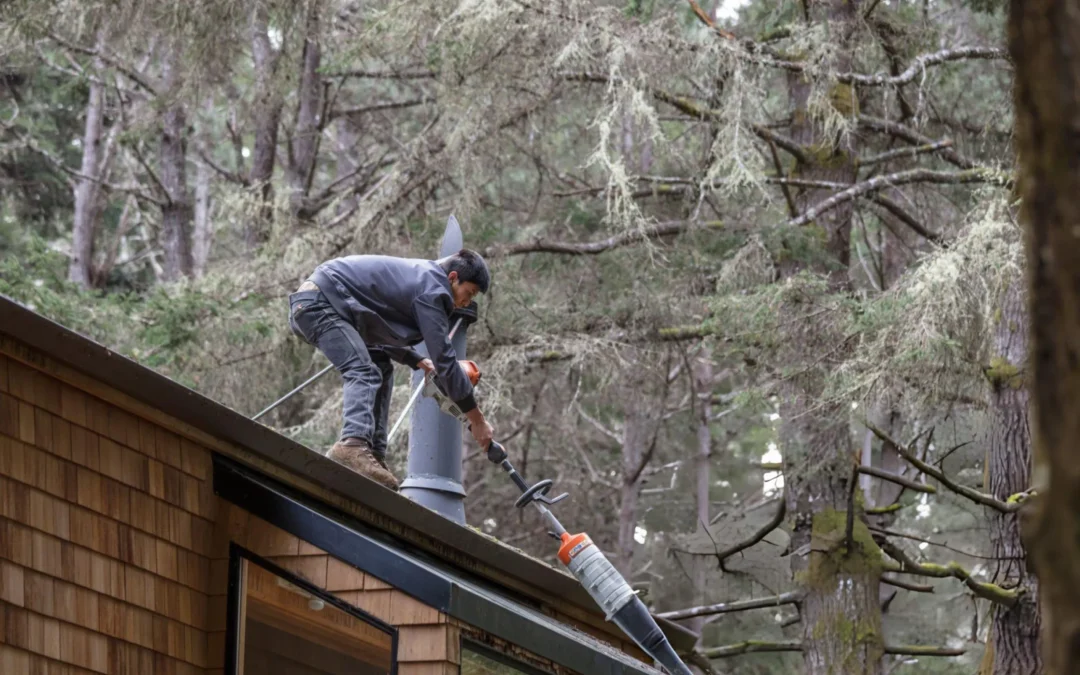
Regular chimney sweep services can help remove this buildup before it affects the chimney’s performance.
A professional sweep may focus on:
- Soot and ash
- Creosote deposits
- Loose debris
- Animal nesting materials
- Other blockages inside the flue
Keeping these materials under control can help maintain proper airflow and reduce fire risks.
When Should You Schedule Both Services?
There are several situations when combining cleaning with an inspection makes sense.
Consider scheduling both when:
- At the end of the burning season: After months of fireplace use, soot, ash, creosote, and other debris may have accumulated inside the chimney and firebox. Sweeping helps remove this buildup, while an inspection can identify damage or other issues that developed during the heating season. Addressing these concerns early also gives you time to arrange repairs before the next season begins.
- You are preparing for the heating season: An inspection can identify problems before regular fireplace use begins.
- You have not used the chimney for a long time: An unused chimney can still develop blockages, moisture damage, or animal nests.
- You notice smoke coming back into the room: Poor airflow can be linked to blockages or other chimney problems.
- You notice unusual fireplace odors: Strong smells may indicate buildup or another issue that needs attention.
- You have recently changed your fireplace or stove: Changes to an appliance or fuel type can affect the inspection requirements.
- You are buying or selling a home: A more detailed inspection may be needed during a property transfer.
If you need a chimney sweep in Philadelphia, it is worth asking whether an inspection should be completed during the same visit.
Signs Your Chimney May Need Attention
You do not always have to wait for an obvious problem.
Watch for these warning signs:
- Smoke entering the living area
- A strong fireplace smell when no fire is burning
- Visible soot or heavy buildup
- Difficulty starting or maintaining a fire
- Poor airflow
- Debris falling into the fireplace
- Cracks around the chimney or masonry
- Water stains near the chimney
- Signs of animals or nesting materials
These signs do not always point to the same problem. An inspection can help determine what is actually happening.
At the same time, chimney sweep and cleaning may be needed if the flue contains significant soot, creosote, or debris.
When Could Chimney, Relining Be Needed?
Not every chimney problem can be solved through sweeping.
The chimney liner helps contain combustion gases and protects the chimney structure from heat and corrosive byproducts. If the liner is damaged or no longer suitable for the appliance, further work may be required.
This is where chimney relining services can become part of the repair plan.
A professional may recommend relining when there are concerns such as:
- Cracks or damage in the existing liner
- An improperly sized flue
- Deterioration caused by moisture or combustion gases
- Changes to the heating appliance
- Safety concerns identified during an inspection
If you are searching for chimney relining near me, make sure the provider first assesses the existing chimney and explains why relining is necessary.
Sweeping should not be used as a substitute for repairing a damaged liner.
How Often Should You Sweep and Inspect Your Chimney?
For many homeowners, annual chimney care is a sensible starting point. Industry guidance recommends regular chimney sweeping, while the exact frequency can depend on how often the appliance is used, the fuel type, and the amount of buildup.
An inspection schedule can also change when the chimney, appliance, or fuel type changes.
A good maintenance plan may include:
- A professional inspection
- A chimney sweep when needed
- Checking for moisture or masonry damage
- Reviewing the condition of the liner
- Addressing repairs before they become larger problems
If you are looking for a chimney sweep in Philadelphia pa, ask about the inspection process as well as the cleaning itself.
Scheduling chimney sweeping and inspection at the end of the burning season can help remove accumulated debris and identify repairs that may need attention before the next heating season.
Why Professional Chimney Care Matters
Chimney maintenance is about more than removing visible soot.
A professional can identify problems that may not be obvious to a homeowner. This can include hidden liner damage, blockages, structural concerns, and signs of moisture.
The goal is simple: keep the chimney clean, identify problems early, and make sure the system is suitable for safe use.
For homeowners looking for a chimney company near me, choosing a team that provides both inspection and cleaning can make chimney maintenance easier.
Keep Your Chimney Ready and Suitable for use
Sweeping and inspection serve different purposes. Sweeping removes unwanted buildup, while inspection checks the chimney for damage and safety concerns. In many homes, having both done as part of regular maintenance provides a more complete picture of the chimney’s condition.
At D.J. Cross Inc., we provide professional chimney care focused on cleaning, inspection, and identifying issues before they become bigger concerns. Our team can help with chimney sweep services and routine chimney maintenance.
If you need chimney sweep in Philadelphia, we can assess your chimney and recommend the appropriate service.
We also provide chimney relining services when an inspection shows that the existing liner needs attention.
For homeowners considering chimney relining near me, we can help determine whether relining is appropriate for the chimney and appliance.
Our chimney sweep in Philadelphia pa services is designed to help homeowners keep their chimney systems clean and properly maintained.